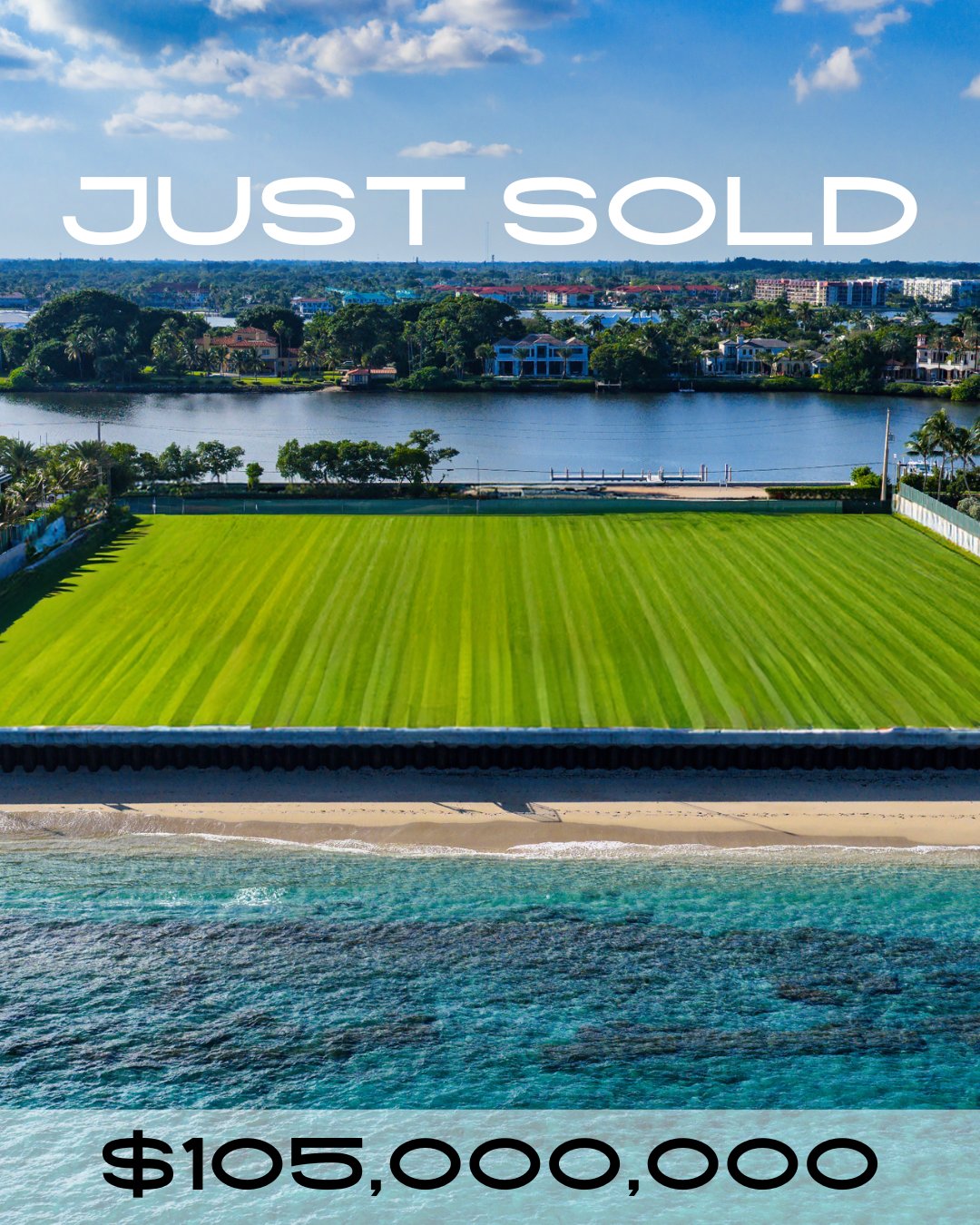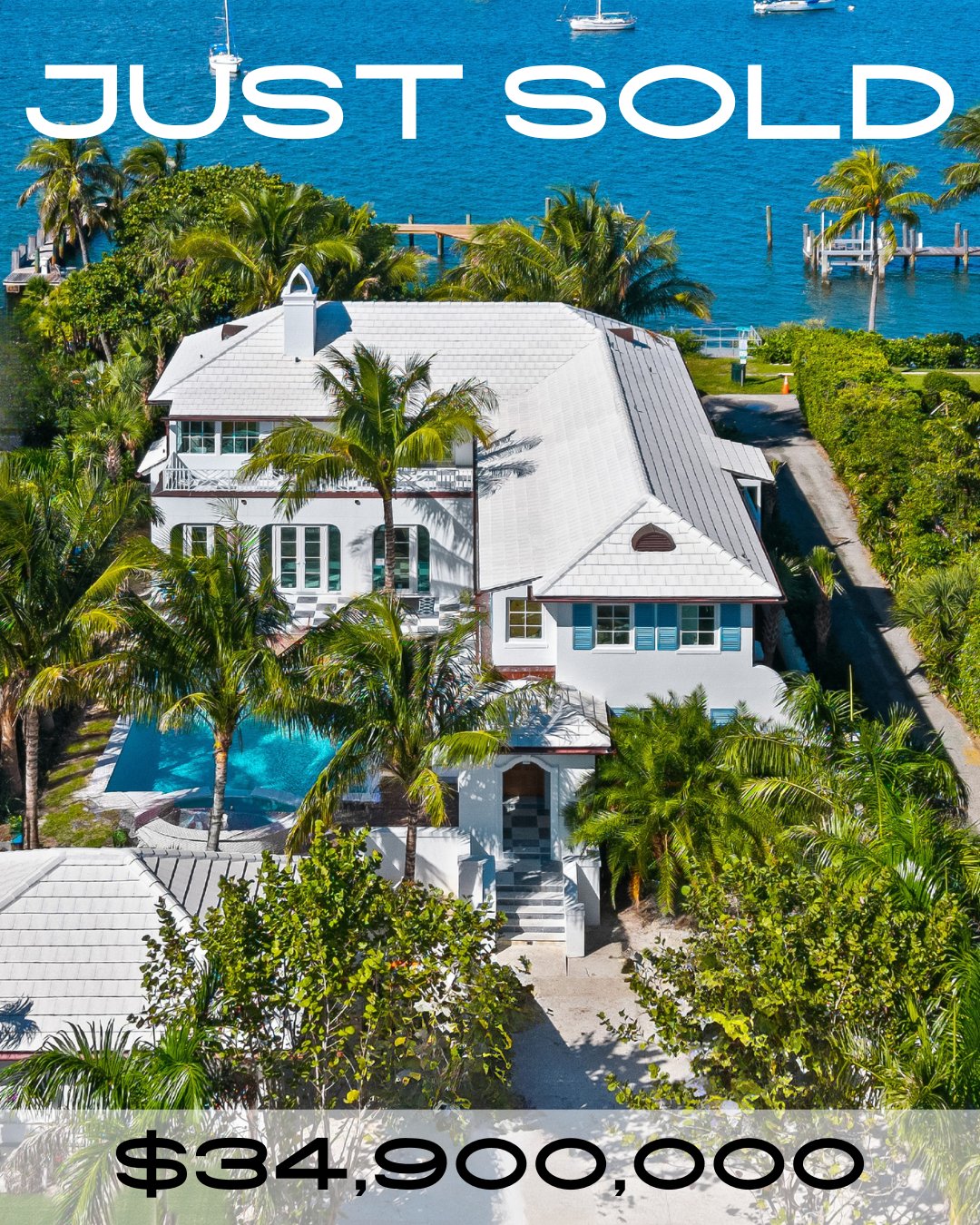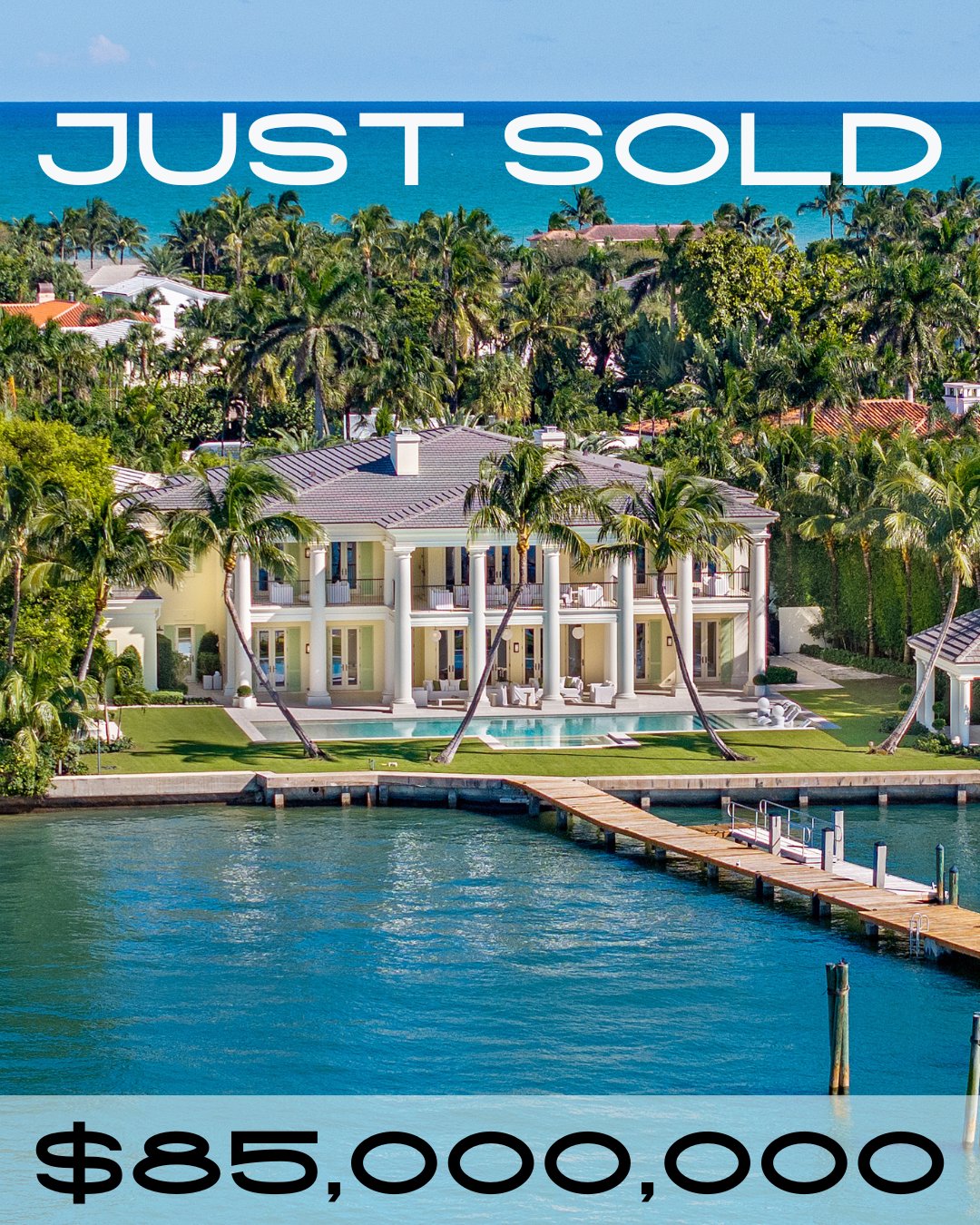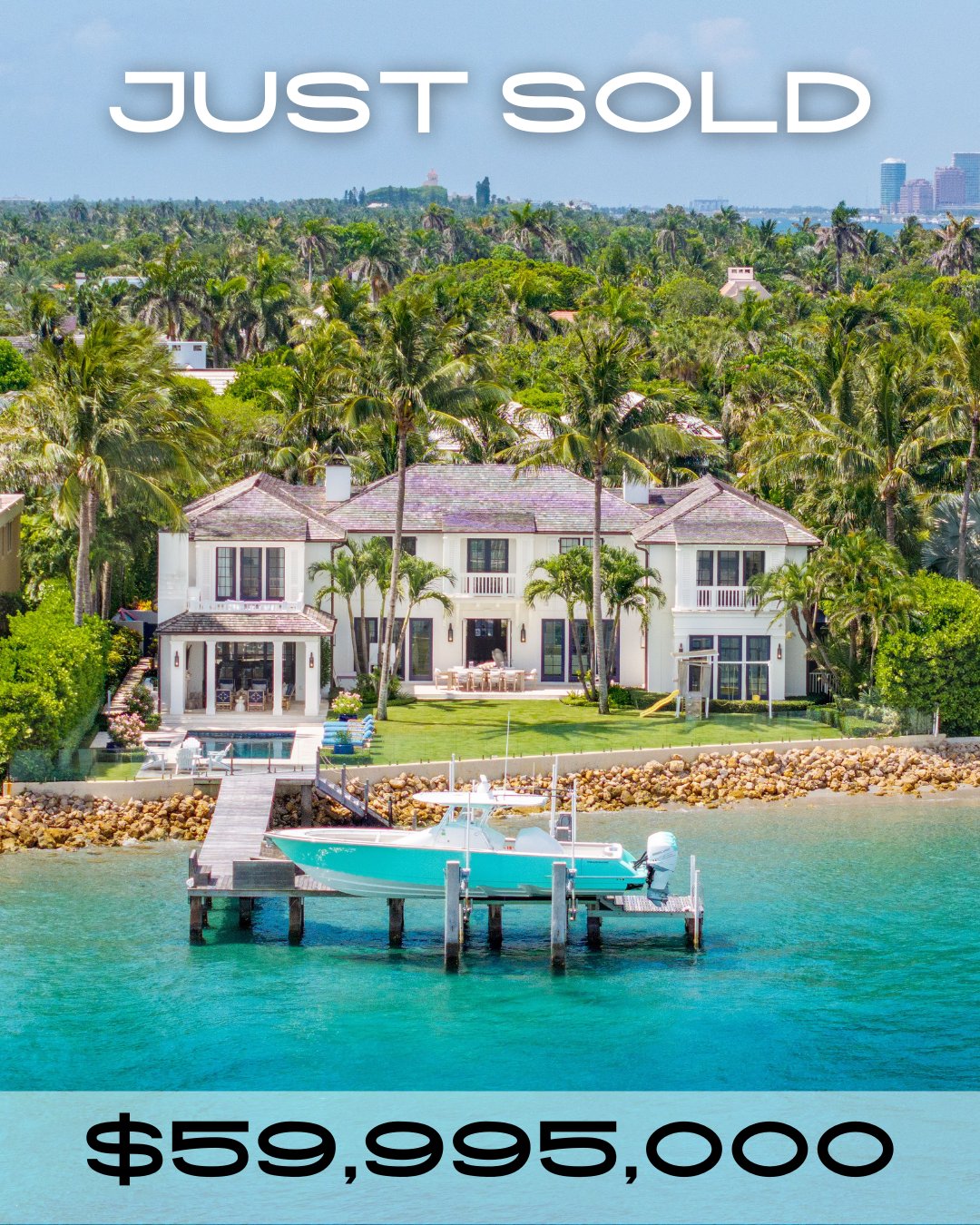
The last week of July delivered a data point that undercuts the conventional story about Palm Beach's off-season. Between July 20 and July 26, 2026, buyers signed 14 contracts on Palm Beach County listings priced above $3 million, with a combined asking volume of $190.7 million, according to the weekly report from Douglas Elliman's Eklund-Gomes team. The top contract was a $88.4 million beachfront estate at 7 Ocean Lane, built by Sabatello Companies and designed by Portuondo & Perotti. That single deal priced at roughly $9,400 per square foot.
The reader who has already scanned the median-price posts on the portals will file this away as a headline. The reader who is actually positioning to buy in the 2026-27 season should read it as a mechanism. Palm Beach's summer is not a lull. It is when patient capital transacts while the seasonal bidding cohort is somewhere else, and the numbers most buyers rely on to gauge urgency are calibrated for a market that only exists five months a year.
The 112-day figure is a trap for buyers who read it as slack
The Eklund-Gomes report shows that the 13 single-family homes going under contract in that week had spent an average of 112 days on the market before finding their buyer. Read casually, that looks like softness. Read against the transaction data, it looks like something else.
Palm Beach County's June 2026 statistics from MIAMI REALTORS + RWorld and BeachesMLS show total home sales up year-over-year for the 10th consecutive month, with $1 million-and-above sales climbing 57 percent (367 to 575). Single-family median for the county rose 11.8 percent year over year to $700,000. Both cannot be true at once unless the 112-day figure is measuring something other than weakness. It is measuring search cost. At the estate tier, the right buyer for a specific property is a small population, and reaching them takes time regardless of demand.
A 112-day average time on market at the $3M+ level, alongside a 57 percent year-over-year jump in $1M+ closings, is not a soft market. It is a market where the constraint is matching, not motivation.
For a buyer positioning now, that reframes the calendar. If a compelling estate has been listed since spring, its extended DOM is not a discount signal by default. It is a signal that the seller has been waiting for a specific type of buyer who tends to appear in late summer, ahead of the fall season.
What $9,400 a square foot buys that $1,970 does not
The Eklund-Gomes weekly report shows an average contract price of $14.3 million across the 13 single-family deals last week, or roughly $1,970 per square foot. The 7 Ocean Lane contract cleared at nearly five times that per-foot figure. The gap is where island economics live.
The 9,400-square-foot "Toes on Sand" residence faces 100 feet of shoreline and includes an underground vault sized for 10 to 14 vehicles, per the Corcoran listing. Sabatello acquired the half-acre parcel for $39 million in 2022 and built the house on it. Roughly $49 million of the asking price is attributable to construction, design, and the scarcity premium of a newly built oceanfront lot that clears current insurance, elevation, and impact-glass expectations without a renovation cycle.
The takeaway for a buyer comparing options across the county corridor is not that Palm Beach Island is expensive. It is that per-foot pricing at the trophy tier is dominated by two variables that median data cannot see: linear feet of direct water frontage, and whether the structure is delivered turnkey to 2026 code. A resale estate on a similar lot with a 1990s structure trades at a fraction of that number, and the delta is essentially the buyer's future renovation budget with a risk premium attached.
The season is compressing at the top
The Palm Beach Daily News reported that the 2025-26 season, running October through late April, recorded 15 single-family sales at $30 million or more, nearly double the eight in that range during the prior season. Seven of those transactions exceeded $55 million, and the top deal landed near $77 million.
| Palm Beach Trophy Segment | 2024-25 season | 2025-26 season |
|---|---|---|
| Single-family sales at $30M+ | 8 | 15 |
| Sales above $55M | fewer than 7 | 7 |
| Top reported deal | below $77M | ~$77M |
Palm Beach ranked third globally for prime residential price growth over the last five years in the Knight Frank Wealth Report 2026. The pattern is consistent across the numbers: the concentration of ultra-high-value transactions is deepening, not diffusing.
For sellers, the compression means the pool of qualified buyers for a $30M+ estate is deep enough now that pricing decisions made in July shape whether the property is a Q4 story or a February story. For buyers, it means the properties best positioned to trade next season are the ones being staged and quietly shown right now.
The MLS is a partial map at the estate tier
A structural feature of the Palm Beach market that median-price coverage almost always understates: a meaningful share of transactions above $15 million never appear on BeachesMLS. Off-market activity has been documented across recent industry commentary, including the June 2026 PR Newswire release from Darlene Streit of The Corcoran Group, which noted that buyers in the segment prefer privacy and early access while sellers place greater value on confidentiality.
This has three practical implications for a buyer using public data to plan.
The first is that the county's reported inventory count is not the available inventory count. Estates that owners are willing to sell at the right price, but unwilling to expose to public marketing, do not show up in months-of-supply calculations. The real months of supply at the estate tier is functionally tighter than the county numbers imply.
The second is that reported days-on-market for the segment is biased upward. Properties that trade privately in 30 days never enter the DOM average. The 112-day figure describes the subset of estates whose sellers accepted public exposure, which skews toward properties that were harder to place quickly. A buyer who assumes the average deal takes 112 days is planning against the wrong distribution.
The third is that access is the actual scarce resource. The Palm Beach season concentrates listings in October through February, but the properties that transact between $15M and $50M are increasingly matched through relationships before that window opens. The buyer who arrives on November 1 with a search brief is competing for the residual set.
What the summer window is actually good for
The stretch from August through mid-October is the operational window for a buyer targeting a 2026-27 season purchase. Three moves it enables that the season itself does not.
Private tours without the seasonal audience. Sellers of significant estates who plan to list in October are increasingly willing to grant early access to serious buyers in August and September, before staging photography and press coordination lock the property into a public timeline. Once a property is publicly listed, the seller's negotiating posture shifts, and the buyer loses the informational advantage of pre-market conversations.
Structural due diligence with runway. The oceanfront and intracoastal estates that draw the deepest interest in season also carry the most involved diligence: seawall condition, revetment history, elevation certificates, insurance binder review, and impact-window compliance under current code. Running that work in September, when engineers and inspectors have availability, is materially different from running it in January under a competing-offer clock.
Board and club timing. Several Palm Beach residential contexts involve HOA or club approvals that operate on their own calendars. Streit's Corcoran guidance flagged club memberships and HOA approvals as recurring complexities in this market. A summer start allows the approval track to run in parallel with the property search rather than compressing into the closing period.
A short FAQ
Does the off-season actually produce better pricing at the trophy tier?
The evidence is mixed and property-specific. Aggregate median data does not resolve the question because the trophy segment is small enough that a single transaction moves the number. What the summer window reliably produces is fewer competing bidders on a given property, which is a different form of leverage than a headline discount.
How much of the market really trades off-market?
The precise share is not publicly measurable, which is itself the point. Industry commentary through 2026 has consistently described a growing share of $15M+ deals moving through private channels. Any buyer whose search is limited to what appears on the MLS is looking at a fraction of the segment.
Is a 2025-built estate priced at $9,000+ per square foot defensible against resale alternatives?
That is a property-by-property analysis, not a market-wide answer. The relevant comparison is not the county average per-foot figure. It is the delivered-to-current-code cost of the specific alternative: an older estate on a comparable lot plus a realistic renovation budget, permit timeline, and construction risk premium.
The buyers who transact well in the 2026-27 season are, in most cases, the buyers who began the conversation in August. If you are considering a Palm Beach acquisition or preparing to bring a significant property to market ahead of the fall, Margit Brandt Palm Beach can arrange a private consultation to walk through current listed inventory, quietly available properties, and the diligence timeline specific to your objectives.