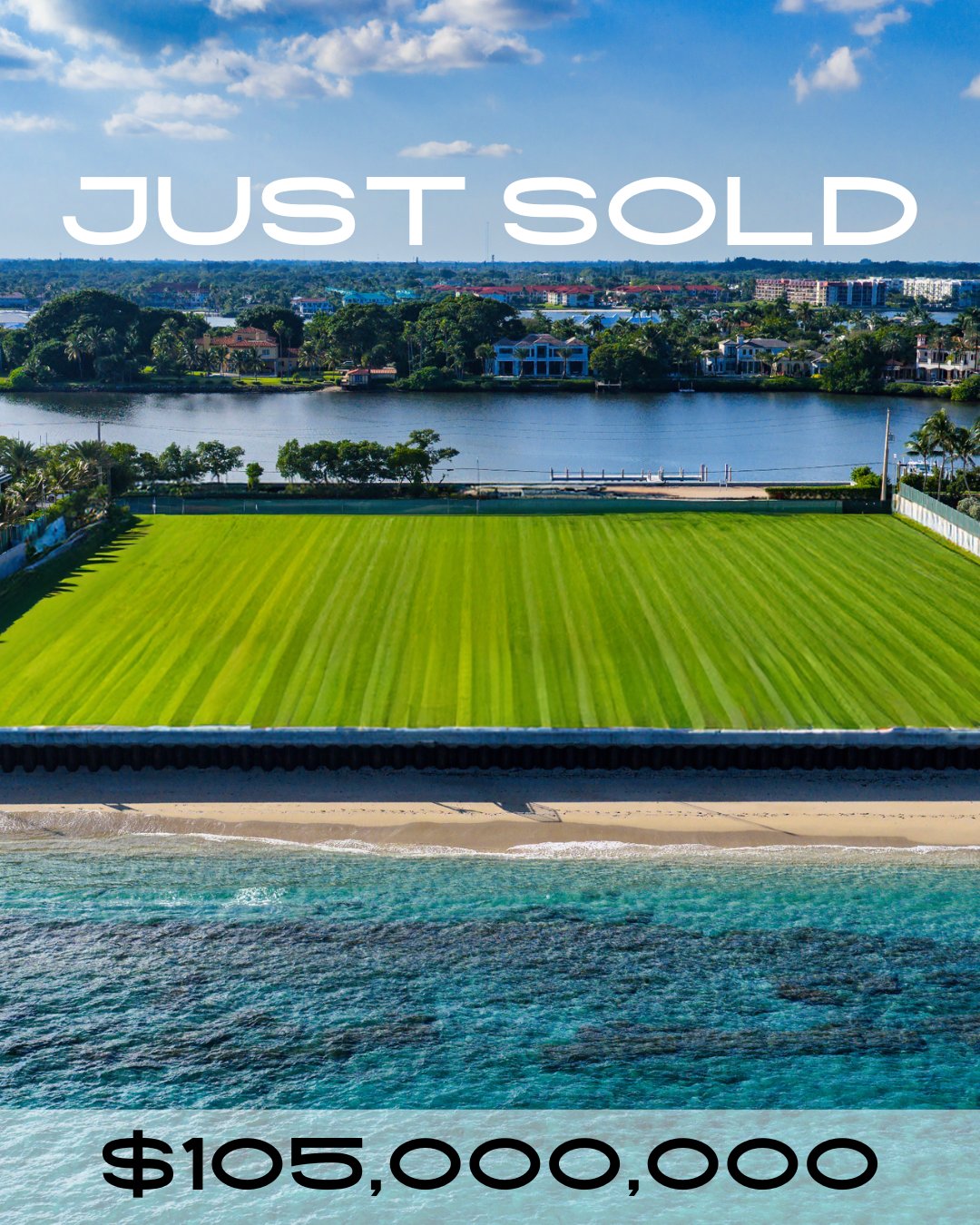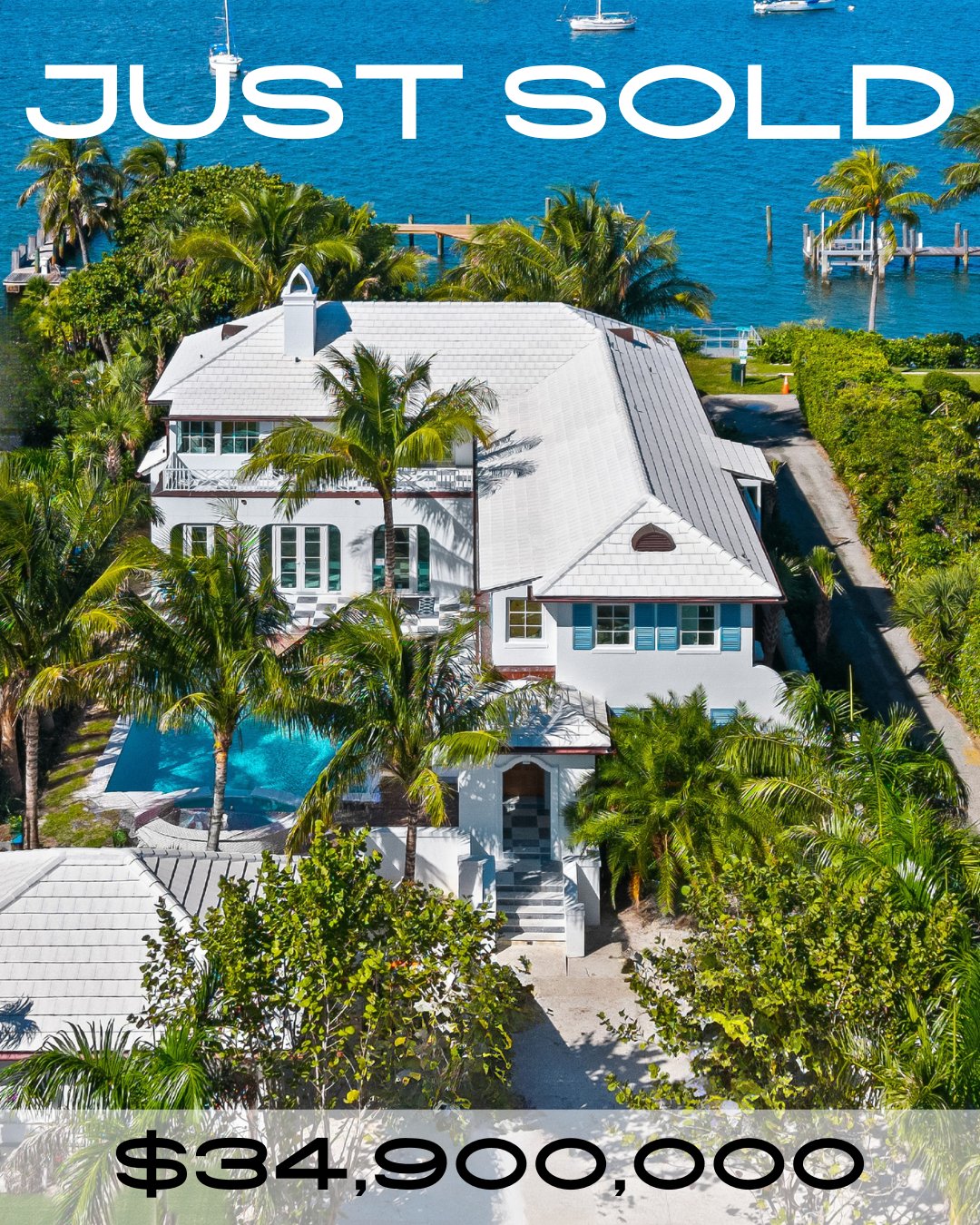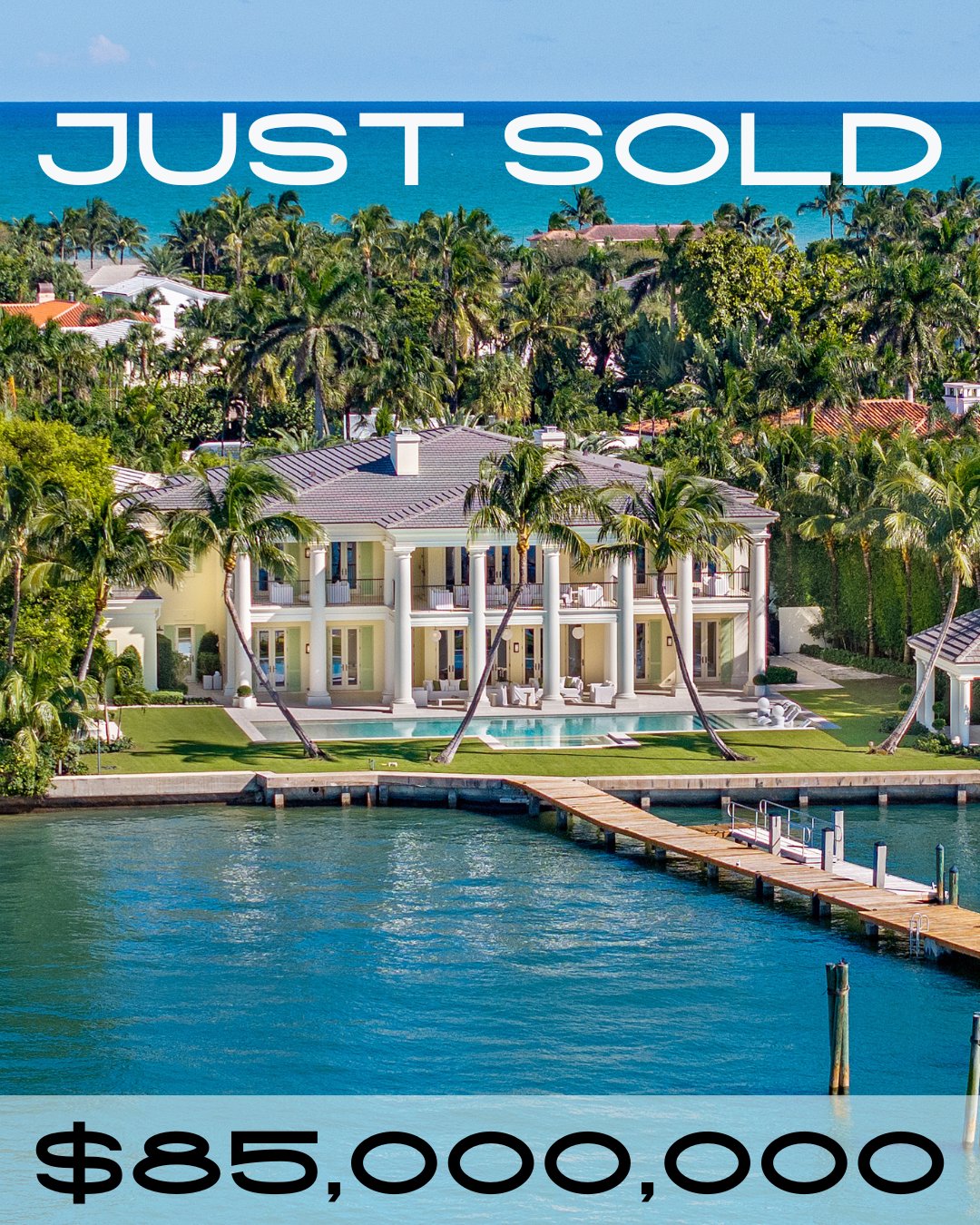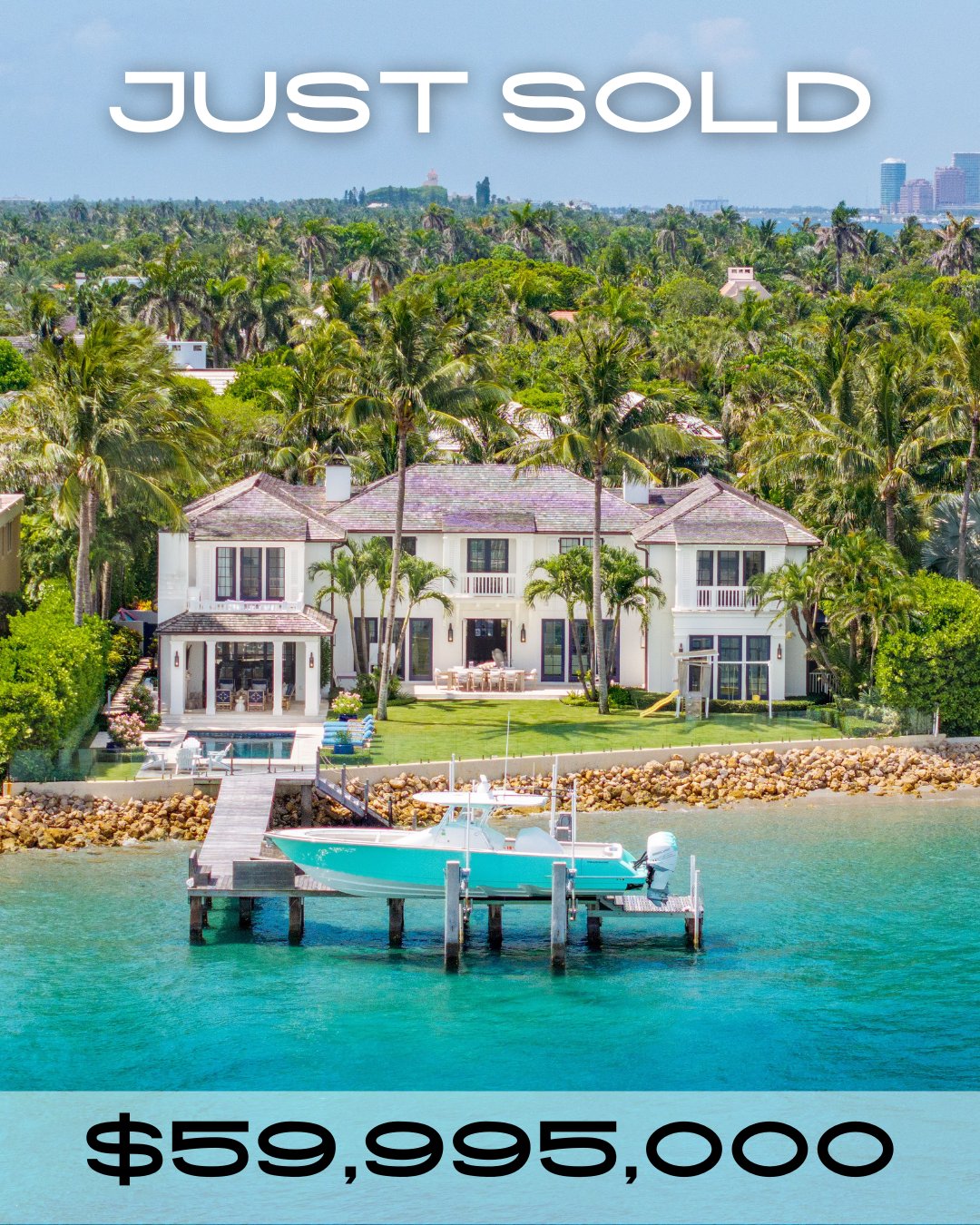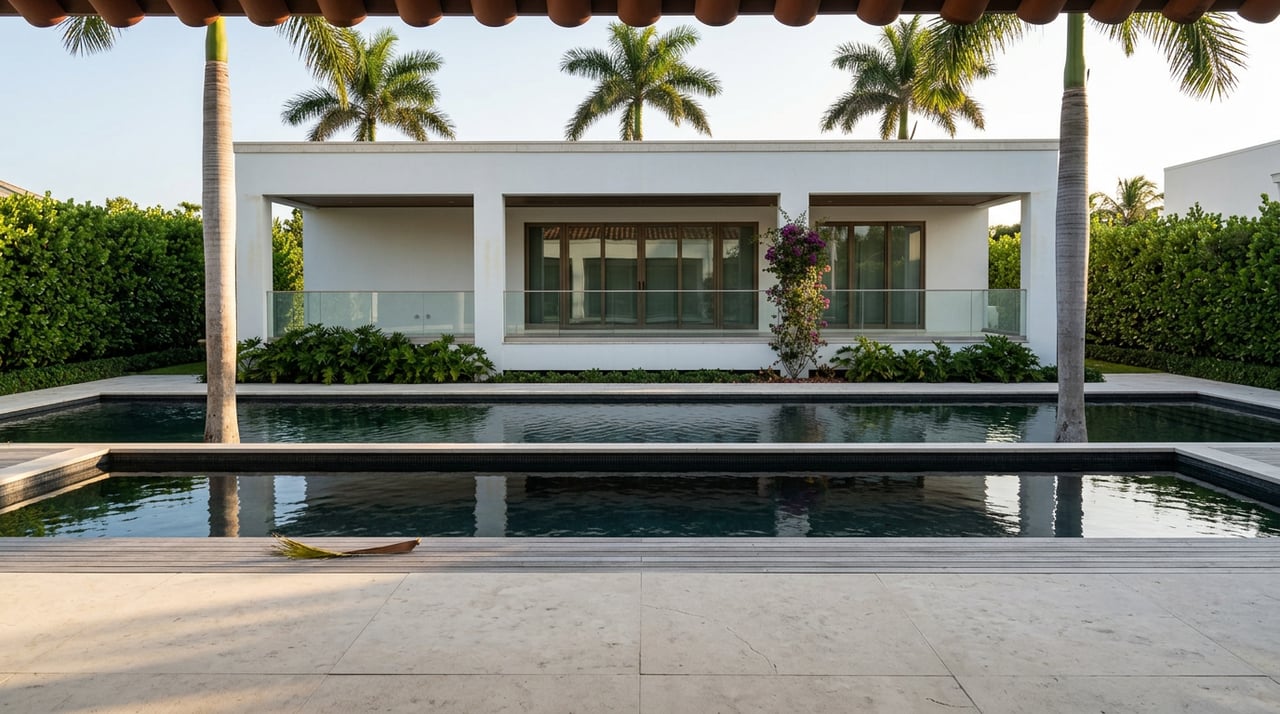
Pull up the public listing history for 10 Tarpon Isle and one number sits there like a typo. In a snapshot taken this year, an automated valuation model priced Palm Beach's only private island at a figure running well over 350 percent above the average of the five "comparable" homes it used to make that calculation. Those comparables are handsome Palm Beach houses, some with long open water views, none of them surrounded on all four sides by the Intracoastal Waterway, none of them reached by a private gated bridge, none of them a market of one.
The algorithm isn't broken. It's doing exactly what it was built to do: average recent sales of similar properties and extrapolate. The problem is that there is no similar property. That gap between what a valuation model spits out and what the asset is actually worth is not a curiosity. It's the same gap that shapes how every genuinely singular estate in Palm Beach gets bought, financed, and sold, and it's worth understanding before you assume the tools that work for a normal home purchase will work here too.
What Tarpon Island's own price history actually shows
Start with the transaction record, because it tells the story better than any explainer can.
Developer Todd Michael Glaser, working with investors Jonathan Fryd of Fryd Properties and Scott Robins of Scott Robins Cos., bought the 2.3-acre island in 2021 for $85 million. That price covered the land and renovation plans for the existing 1937 estate, originally designed by Howard Major. Glaser rebuilt and expanded the property into a 28,600-plus square foot compound with 11 bedrooms, two pools, a lit tennis court, and two private docks. The island went back on the market in October 2021 at $125 million. By December 2022 the ask had climbed to $218 million. It was pulled, relisted, and eventually offered at $187.5 million during final construction, which made it the most expensive home ever marketed on Palm Beach's MLS.
It closed in May 2024 for a reported $150 to $152 million, a discount of roughly $35 to $37 million off that final ask. The buyer, later identified by the Wall Street Journal as Australian infrastructure investor Michael Dorrell, who runs the New York based investment firm Stonepeak, purchased the property in an all-cash deal. Margit Brandt represented the buyer. Chris Leavitt of Douglas Elliman and Suzanne Frisbie of the Corcoran Group held the listing, with Christian Angle of Christian Angle Real Estate also involved on the seller's side. At the time it closed, it was the highest price ever paid in Palm Beach for a property on the Intracoastal without ocean frontage, and one of the largest residential transactions in Florida history.
Look at that arc again: $85 million, then a run-up past $200 million, then a close in the $150 million range. If you tried to explain that swing using the logic of a normal market, comparable sales climbing steadily as demand builds, you'd conclude something went wrong. Nothing went wrong. What happened is that a property with no peer set was priced, re-priced, and finally negotiated by two parties who both understood there was no third number to check it against.
Why "comps" is the wrong tool here
In an ordinary transaction, comparable sales do real work. An appraiser pulls three to six recent closings of similar homes nearby, adjusts for size and condition, and arrives at a value the lender can stand behind. That system depends on a supply of similar homes selling often enough to generate current data.
Trophy waterfront estates start to strain that system once you're above roughly $2 million, where appraisers may have few recent sales in the specific location and comparables that differ significantly in size, lot, or feature set, forcing large and often subjective adjustments. Once a property becomes genuinely singular, a private island with 1,300 feet of water frontage and its own bridge, custom or architecturally significant features that have no direct market comparison, the comps model doesn't strain. It fails outright.
That failure has consequences for anyone using a mortgage. Jumbo lenders on high value properties frequently order two appraisals, and when the two disagree the lender typically uses the lower figure for underwriting, which raises the odds of a shortfall on exactly the properties where an accurate number matters most. When an appraisal comes in below the contract price, the gap has to go somewhere.
| If the appraisal comes in low | What happens next |
|---|---|
| Buyer covers the gap | Buyer brings additional cash to closing to make up the difference between appraised value and contract price |
| Seller reduces the price | Requires the seller to agree, which they may not do if they believe the appraisal is wrong |
| Both sides split the difference | The most common resolution in practice, according to luxury appraisal advisors |
| Deal collapses | Buyer exits on the appraisal contingency, and the seller is left with a property that has a failed escrow behind it |
Every one of those outcomes assumes there was financing in the deal to begin with. That's the detail that explains why Dorrell paid cash, and why cash so often wins in this segment generally. It isn't a signal of wealth alone. It's a way of removing an entire category of risk that a financed buyer cannot remove no matter how strong their pre-approval looks.
Cash isn't a preference here, it's a structural advantage
A financed offer on a genuinely unique property carries a built-in contingency that has nothing to do with the buyer's creditworthiness: will an appraiser, working from a thin or nonexistent comp set, produce a number that supports the price two sophisticated parties already agreed on? A cash buyer never has to answer that question to close the deal. The seller isn't waiting on an appraisal management company's assignment queue or a second opinion that might undercut the first.
That's a meaningfully different negotiating position than a buyer who needs a jumbo loan to close, and it's part of why cash purchases dominate one-of-a-kind trophy transactions at this level. A cash buyer can and often does commission their own independent appraisal anyway, not because a lender requires it, but because the same scarcity of comparables that troubles an appraiser is a real reason for a buyer to check their own number before committing eight or nine figures. The difference is that on a cash deal, that number informs the decision instead of controlling whether the deal happens at all.
What this means if you're comparing Tarpon Island to a conventional Palm Beach estate
If you're weighing a private island against a house in one of Palm Beach's established estate sections, the financing conversation should happen before the architecture conversation. A traditional Palm Beach estate, even a very expensive one, usually sits inside a pool of recent closings an appraiser can actually use. That means a financed offer behaves close to how you'd expect: the appraisal supports the price, the loan funds, everyone moves on.
A property like Tarpon Island doesn't offer that comfort. There is exactly one of it. If you intend to finance a purchase like that, you should assume the appraisal will introduce friction rather than confirm your number, and you should structure your offer and your liquidity around that assumption from the start rather than discovering it mid-escrow. If you intend to pay cash, the appraisal becomes a tool you control rather than a hurdle someone else administers.
None of this is a reason to avoid a singular property. It's a reason to walk into the negotiation understanding that the price isn't being checked against a market the way a conventional home's price is. It's being checked against what two parties, informed by everything they can find including off-market data an appraiser may never see, agree the asset is worth.
A short FAQ
Does every trophy sale in Palm Beach close in cash? No, but cash is disproportionately common at the very top of the market precisely because financing introduces appraisal risk that a cash buyer never has to negotiate around.
If I'm paying cash, do I still need an appraisal? There's no lender requiring one, but an independent appraisal is worth commissioning above roughly $3 million as a check on your own number, especially when the property has few or no true comparables.
Can a buyer challenge a low appraisal? Yes, through a reconsideration of value request, but it requires documented evidence: comparable sales the appraiser missed, including off-market transactions, or a factual error in the report. Disagreement with the conclusion alone isn't grounds.
If you're weighing a singular property against a more conventional Palm Beach address and want to understand how that decision should shape your offer structure, timeline, and liquidity plan before you're in contract, Margit Brandt Palm Beach can walk through what a deal like this actually requires. Request a private consultation to start that conversation.