"You really need to have the right team. That means attorney. It means architect, builder. You just have to be realistic, too, in your expectations." Margit Brandt has said this to more than one buyer standing in a house they haven't closed on yet, already sketching where the pool will go.
It is good advice, and it is also a warning. The realism she is describing has nothing to do with taste or budget. It has to do with a calendar that starts running the day you close, not the day you signed the contract, and that calendar belongs to a five-member commission, not your general contractor.
The clock nobody puts in the purchase agreement
Ask most first-time Palm Beach buyers when their renovation begins and they will say "after closing." Ask a builder who has delivered a dozen projects on the island and they will tell you closing is closer to the middle of the process than the start.
At any given time, roughly 80 new or substantial single-family projects are moving through permitting on the island of Palm Beach. Fewer than half of those deliver on the owner's original schedule. The reason almost never traces back to the job site. It traces back to the Town's Architectural Commission, known locally as ARCOM, which reviews the exterior of every new build and substantial alteration visible from a public right of way before the Building Division will even look at a permit application.
The math is specific enough to plan around, which is exactly why so few buyers do. A new single-family permit review on the island runs 12 to 20 weeks on its own. ARCOM adds roughly 6 to 12 weeks on top of that, assuming the project clears preliminary review without a remand. Oceanfront parcels then layer on Florida's Coastal Construction Control Line review, which on Palm Beach Island runs in series with ARCOM rather than alongside it, adding another 3 to 5 months of dead time before a shovel goes in the ground. Construction on a 6,000 to 10,000 square foot residence then runs 16 to 22 months, assuming no major change orders.
Add it up and you get the gap between a 24 month project and a 42 month one. That gap opens up in review rooms, not on site.
| Phase | Typical Duration | What's Actually Happening |
|---|---|---|
| Pre-application and scheme design | 4 to 8 weeks | Architect develops massing and materials before anything is submitted |
| First ARCOM hearing | 4 to 6 week cycle per remand | Commission votes preliminary approval or sends the scheme back |
| Final ARCOM approval | Included above | Elevations at quarter inch scale, material samples, window details |
| Building Division permit review | 12 to 20 weeks | Runs only after ARCOM sign off |
| CCCL review (oceanfront only) | 3 to 5 additional months | Runs in series with ARCOM, not parallel |
| Construction | 16 to 22 months | For a 6,000 to 10,000 sq ft custom residence |
A recent ARCOM meeting agenda shows the volume behind those averages. New single-family applications appeared for addresses including 230 Plantation Road and 418 Seaspray Avenue, alongside a full renovation and landscape redesign at 1066 North Ocean Boulevard. Even a storefront at 259 Worth Avenue seeking approval for new signage, an entry door, and awnings needed a full ARCOM hearing, and was deferred to the commission's June 24, 2026 meeting. On this island, an awning gets the same procedural seriousness as a roofline.
Not every estate is carrying the same clock
The Town's official count puts more than 328 landmark properties, sites, and vistas under protection through the Historic Preservation Ordinance, which the Town Council first adopted in 1979. Layered on top of individual landmarks are entire historic districts covering parts of Midtown, the Sea Street area, and the El Brillo corridor in the South End, with pockets of overlay protection reaching into the North End as well.
If a property sits inside one of these districts, or carries individual landmark status, the review authority shifts from ARCOM to the Landmarks Preservation Commission under Chapter 54 of the Town Code, and the standards get considerably more specific. Demolition of a structure that predates 1965 inside an overlay is not routine. Additions to a contributing structure must read as subordinate in scale and differentiated in detail, meaning you cannot simply extend the original design and call it a match. Stucco finish, roof tile profile, and window muntin width all get reviewed to a level of specificity most builders working outside Palm Beach have never encountered. Historic renovations, as a category, run 15 to 30 percent higher than comparable work on non-historic properties, with timeline extensions of two to six months showing up often enough that experienced architects build the padding into the schedule before anyone asks for it.
None of this is disclosed in a way that shows up in a listing description. A buyer touring a house in the Estate Section or along Ocean Boulevard is not told, in the moment, which of these review tracks the property sits inside. Finding out is due diligence, and it is due diligence most buyers skip because nobody hands them the question to ask.
What happened on Chilean Avenue this spring
In May 2026, the Town Council voted to designate a century old bungalow at 141 Chilean Avenue as a landmark over its owner's formal objection. The vote was initially tied 2 to 2 before Mayor Danielle Moore broke the deadlock. The owner, a corporation that had held the property for roughly three decades, had argued through counsel that the house failed to meet the ordinance's criteria for historical significance and architectural distinction. The council disagreed.
Under the town's landmarks ordinance, owner opposition does not prevent a designation. Once a property is landmarked, an owner needs Landmarks Preservation Commission approval for any exterior change visible from the street, and in some cases interior features as well, regardless of whether the designation was welcomed or fought.
The Chilean Avenue case is not about a $30 million oceanfront trophy, but it is instructive precisely because it wasn't. It shows that landmark status in Palm Beach can attach to a property whether or not the current or future owner wants it, based on a set of criteria the Landmarks Preservation Commission applies rather than one the market applies. A buyer evaluating an older home anywhere in the Estate Section, El Cid, or the streets adjacent to Flamingo Park is not just buying square footage and lot lines. They are buying exposure to a designation process that can run independent of their intentions.
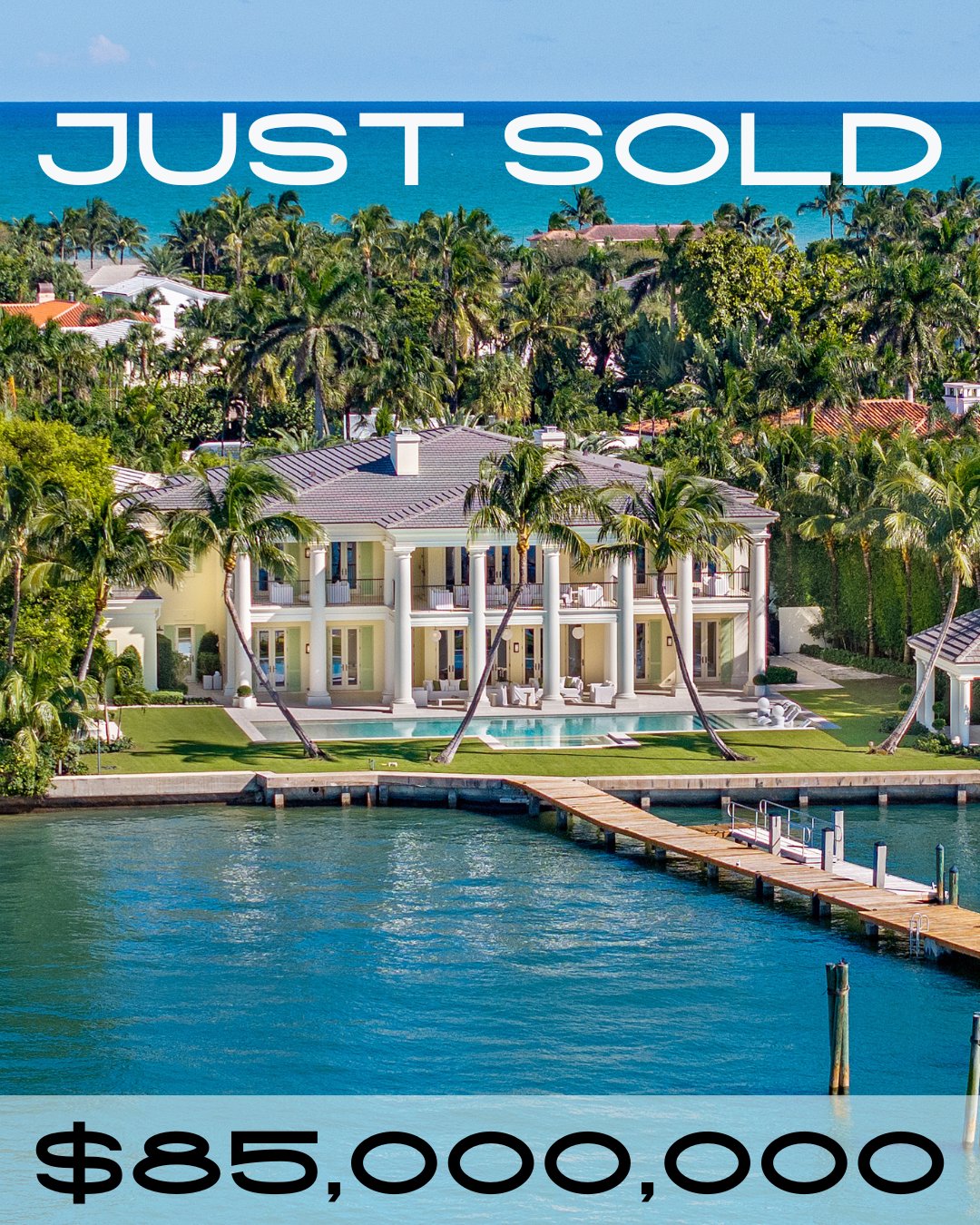
Even developers who have done this before treat it as a serious variable rather than a formality. Todd Michael Glaser, who paid $85 million for Tarpon Island and $18.5 million for the El Brillo Way estate once owned by Jeffrey Epstein before demolishing it, has said publicly that the ARCOM process can be disheartening even for someone with his track record, including a preservation award from the town's own Preservation Foundation for a separate restoration project.
The advantage of asking before you own
There is one lever available to buyers that most never use: a pre-application conversation with the Town before the parcel is theirs. The overlay rules do not change based on who owns the property, but the ability to have staff preview a scheme, flag historic-district exposure, and surface likely objections before a contract is signed is a genuine advantage, and it is one that requires a relationship with someone who already knows which questions the Town's planning staff will answer informally.
That is the discreet, unglamorous half of buying well on this island. The other half is knowing, before you write an offer, whether the house you love is going to cost you an extra six months and 20 percent before you can touch the kitchen.
A short FAQ
Can I close on a Palm Beach estate before ARCOM approves my renovation plans? Yes, and most buyers do. The tradeoff is that the review clock starts at closing rather than at contract, and the carry costs during design and review become the buyer's expense rather than the seller's.
Does landmark status hurt resale value? It depends on the buyer. Some prize the prestige and the guarantee that a neighbor cannot tear down an adjacent property for a mismatched design. Others view the restrictions on materials and modifications as a real constraint on future flexibility. Either way, it is a fact to underwrite into the price, not a surprise to discover afterward.
Is the timeline different if I buy off-market? The overlay rules are identical whether a sale is public or private. What off-market access can offer is time: the chance to have a quiet conversation with the Town's planning staff before you own the parcel, which is not something a public listing timeline typically allows for.
If you are evaluating a Palm Beach estate and want a clear read on which review track it falls into before you make an offer, Margit Brandt can walk you through it. Request a private consultation.